
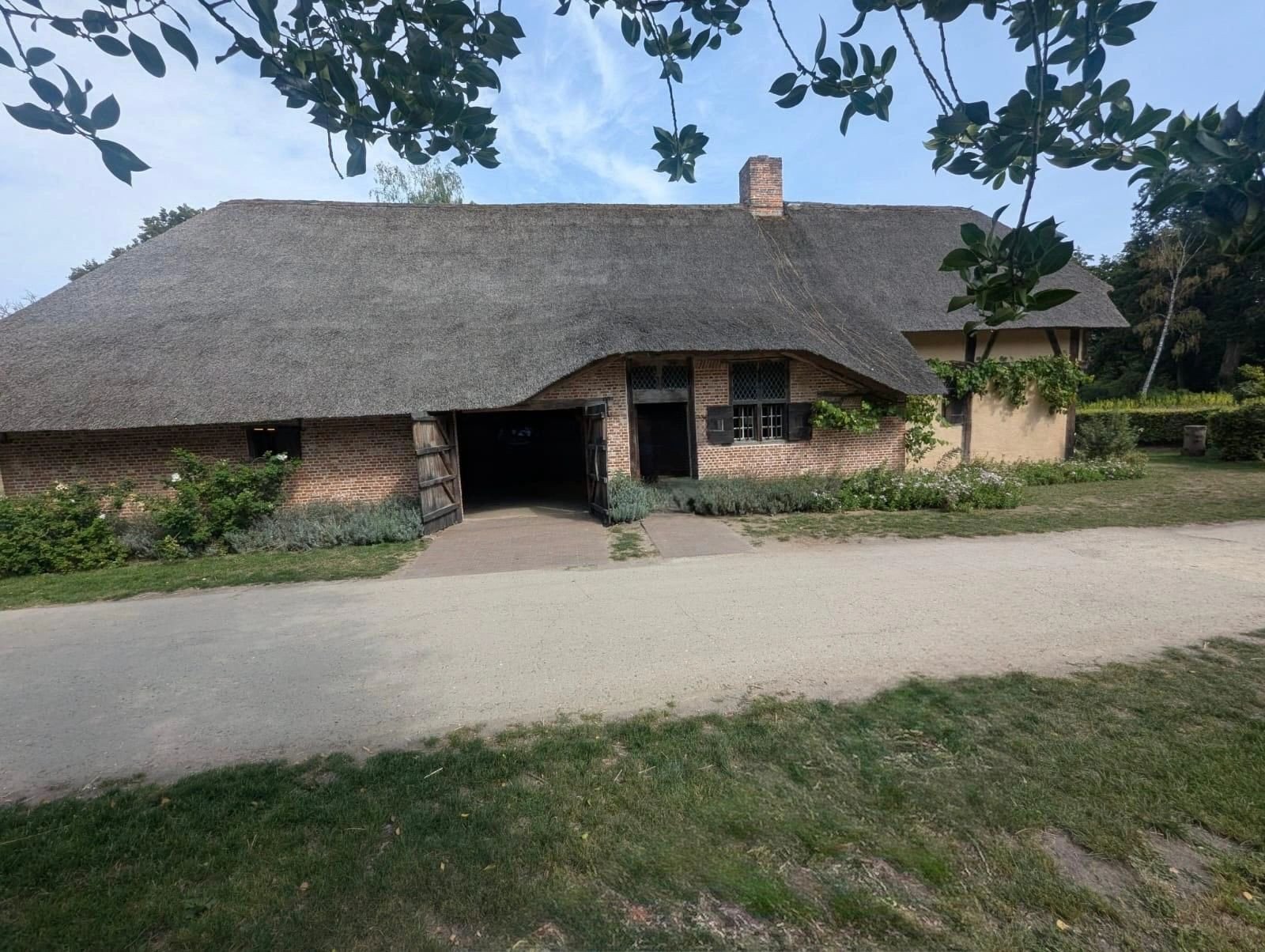
Nick Willems proudly shares the story of Willems Diamonds with SBD, a family business that has quietly but determinedly carved out its place in the diamond world. The history of Willems Diamonds begins humbly, on a farm in the hamlet of Vispluk in Vorselaar. It was Nick’s great-great-grandfather who, in 1925, gave his son the opportunity to start a diamond polishing workshop. ‘Suske’ Willems built the workshop next to the barn. The original farm was moved in 1962 to Bokrijk, where it was reconstructed and can still be visited today.
What once began as a traditional family craft now lives on in the fourth generation. During the interview, daughter Morgane Willems is present. She recently joined the family business after completing a course in diamond polishing. For her, it was a conscious decision to get to know the profession up close and help shape the future of the Belgian diamond industry.
“We’ve always had a polishing workshop, but for years we worked exclusively for a De Beers sight holder. One client, for decades. When that sight ended, everything suddenly had to change.” The transition to a broader client base wasn’t easy. “I really had to go door-to-door looking for clients. That’s when you truly get to know the diamond district,” says Nick Willems. In today’s context, it’s almost a given: anyone running a diamond company now must focus on multiple clients, diverse markets, and a broader approach.
What sets Willems Diamonds apart from other Belgian polishing workshops is their wide-ranging expertise. “We polish everything: from flawless stones to colored diamonds to large white diamonds, and sometimes even small stones - custom work for watches. For example, we polished yellow diamonds for an eagle’s wing. Such a broad offering requires not just craftsmanship, but also the latest technology. You need an organization that can handle that.” Nick Willems personally oversees the translation from design to the polishing process. “We take care of that thinking process, so our polishers can simply follow the plan. That saves time and improves precision.”
An employee at Willems Diamonds illustrates how deeply the craft is rooted in the region. “Everyone had parents in the diamond industry. There was a polishing workshop on every street. A mill in every backyard.” He speaks nostalgically about the days of the diamond school in Vorselaar: “I started when I was fourteen. There were three classes of about 25 students each. First we had a lot of theory, then hands-on training: we learned to cut an eight-cut, top and bottom, and then to brillianteer.”
Today, Willems Diamonds is the only remaining active polishing workshop in the wider Turnhout area. The rest have gradually disappeared or been converted into homes and memories.
Nick also observes how Antwerp’s diamond district has lost much of its appeal in recent years. “There’s no diamond experience center in the district to welcome visitors, and there are very few places to eat. While it should be a world-class destination attracting people from everywhere, it’s now a place with lots of vacancies.
If we had top brands like Louis Vuitton and Cartier on the same street, with flair and experience, then it would become relevant again.”
Diamond must be part of a bigger story, as a component of high-end fashion and art.
For him, it’s clear: diamond must be part of a bigger story, as a component of high-end fashion and art. “Just cutting and polishing stones isn’t enough. You need to collaborate with other sectors, and the end customer should have a true, complete experience.” In that spirit, a collaboration has also emerged with a small-scale Antwerp fashion house, with which Willems Diamonds is participating in a fine jewelry collection.
The Prisma project, which Nick Willems is developing together with business partner Alexander Appels, also fits within this vision. More on this will be featured in the next edition of the newsletter. “The project aims to position Belgian colored diamonds in a unique way, with a focus on branding, precision, and exclusivity.” Cutting colored diamonds, according to Nick, requires a different mindset: “It involves more mathematical thinking. With white stones, the parameters are known, but with colored diamonds, you have to discover them yourself: the azimuths are constantly shifting.”
Nick is also concerned about the recent tightening of Flanders' labor migration policy, which directly affects the diamond industry. Without being listed as a high-demand occupation by the VDAB, it’s currently no longer possible to hire diamond workers from outside the EU. “The Flemish Minister of Employment is right to want to focus on the available population in Flanders,” he says. “But professions like diamond polisher or sorter don’t make it onto the VDAB list because there’s too little volume in such niche sectors. There should be a solution for these niche sectors, so they can attract the essential talent, even if that workforce is not from the EU.”
Despite these concerns, Nick Willems remains optimistic. He sees a future in a renewed, integrated approach, with space for entrepreneurship, branding, and collaboration. “Even though the diamond sector has lost its ‘spark’ for now, I still believe in it. The intention is absolutely to stay in diamonds,” concludes Nick Willems.
“But on our own terms.”